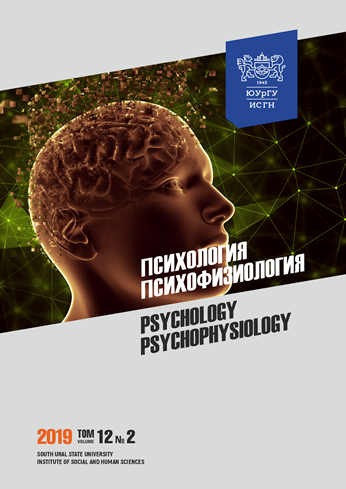
Emotional resonance: an analysis of observations and experimental evidence (discussion paper)
Abstract
Background. The study of the phenomenon of remote influence, referred to as emotional resonance, remains a controversial yet relevant field at the intersection of psychology, neurophysiology, and physics. Despite skepticism from the scientific community, experimental data and theoretical models are accumulating. They require further systematization and analysis to determine future directions for researching this phenomenon. Aim. This paper aims to conduct a review and analysis of contemporary observations, experimental data, and theoretical hypotheses related to remote emotional resonance and psi phenomena, to evaluate their empirical substantiation, and to outline the prospects for further research. Results. This paper summarizes data indicating the possibility of remote bio-informational interaction. It presents neurophysiological correlates (changes in EEG, EMG, and functional brain asymmetry), psychological predictors (high sensitivity and empathy), and experimental results, including the author’s pilot experiment demonstrating the possibility of remote classification of emotional states. This paper discusses hypotheses explaining the mechanisms of the phenomenon – ranging from electromagnetic to quantum-mechanical – and the concept of the brain as a filter that suppresses psi abilities. Conclusion. Despite methodological challenges and the problem of data reproducibility, the body of evidence points to the reality of the emotional resonance phenomenon. Its further study requires rigorously controlled interdisciplinary research focused on neurocognitive mechanisms, enhanced validity, and standardization in accordance with the demands of contemporary scientific methodology.
Downloads
References
2. Bobrow R.S. Paranormal phenomena in the medical literature sufficient smoke to warrant a search for fire. Medical Hypotheses. 2003;60(6):864–868. DOI: 10.1016/S0306-9877(03)00066-5
3. Krippner S. Parapsychological research: a century of inquiry. Journal of the American Society of Psychosomatic Dentistry and Medicine. 1982;29(4):121–127
4. Kekecs Z., Palfi B., Szaszi B. et al. Raising the value of research studies in psychological science by increasing the credibility of research reports: The transparent Psi project. Royal Society Open Science. 2023;10(2):191375. DOI: 10.1098/rsos.191375
5. Shishkin I.F., Komarovskikh K.F. About non-traditional measurements. Mir izmerenii = Measurements world. 2012;3:50–61. (in Russ.).
6. Escolà-Gascón Á., Serra M.V., Houran J. et al. Resources on Escolà-Gascón et al. (2023) remote viewing research per the original CIA experiments. Explore. 2024;20(1):10–16. DOI: 10.1016/ j.explore.2023.07.008
7. Reber A.S., Alcock J.E. Searching for the impossible: Parapsychologys elusive quest. American Psychologist. 2020;75(3):391–399. DOI: 10.1037/amp0000486
8. Freedman M., Binns M.A., Meltzer J.A. et al. Enhanced mind-matter interactions following rTMS induced frontal lobe inhibition. Cortex. 2024;172:222–233. DOI: 10.1016/j.cortex.2023.10.016
9. Cardeña E. What psi research can – and cannot – say about mind beyond the brain. International Review of Psychiatry. 2025;37(2):115–119. DOI: 10.1080/09540261.2025.2466485
10. Beischel J., Schwartz G.E. Anomalous information reception by research mediums demonstrated using a novel triple-blind protocol. Explore. 2007;3(1):23-7. doi: 10.1016/j.explore.2006.10.004
11. Vasiliev L.L. Eksperimentalnye issledovaniya myslennogo vnusheniya [Experimental studies of mental suggestion]. Leningrad. Leningrad University Publ. 1962. (in Russ.).
Kodola O.E., Sochevanov V.N. Put labirinta [The path of labyrinth]. St. Petersburg. Mendeleev Publ. 2003:176. (in Russ.).
13. Krippner S., Saunders D.T., Morgan A., Quan A. Remote Viewing of Concealed Target Pictures Under Light and Dark Conditions. Explore. 2019;15:27–37. DOI: 10.1016/j.explore.2018.07.001
14. Gumenyuk V.A., Dudnik E.N., Korobeinikova I.I., Sudakov K.V. Remote emotional resonance when emotionally experienced music affects a person. Vestnik novykh meditsinskikh tekhnologii = Journal of New Medical Technologies. 2007;14(1):191–193. (in Russ.).
15. Shibkova D.Z., Baiguzhin P.A., Kudryashov A.A. Modeling the state of emotional resonance and assessing its impact on heart rate variability. Prilozhenie mezhdunarodnogo nauchnogo zhurnala “Vestnik psikhofiziologii” = SUPPLEMENT International scientific journal “Psychophysiology News”. 2018;1:87–89. (in Russ.).
16. Badikov V.I., Vasilyuk N.A., Irgashev H.H. et al. Emotional resonance in remote contactless interaction of biological objects. Vestnik novykh meditsinskikh tekhnologii = Journal of New Medical Technologies. 1999;6(2):45–49. (in Russ.).
17. Abramov Yu.B., Vasilyuk N.A., Sudakov K.V. Experimental research in remote emotional resonance. Vestnik novykh meditsinskikh tekhnologii = Journal of New Medical Technologies. 2005;12(3-4):24–25. (in Russ.).
18. Tkach O.G., Novikov A.A. The influence of a persons emotional state on water when listening to music. Biomeditsinskaya inzheneriya i elektronika = Biomedical engineering and electronics. 2014;2(6):151–154. (in Russ.).
19. Vinogradova T.S., Pronichev I.V. Some psychophysiological aspects of non-verbal suggestion. Vestnik Udmurtskogo universiteta. Seriya Biologiya. Nauki o Zemle = Bulletin of Udmurt University. Series Biology. Earth Sciences. 2008;2:95–108. (in Russ.).
20. Jahn R.G., Dunne B.J. Margins of Reality: The Role of Consciousness in the Physical World. H.B. Jovanovich. New York. 1987:436
21. Honorton C. Psi and internal attention states. Handbook of Parapsychology. Ed. B.B. Wolman, V.N. Reinhold. New York. 1977:435–472
22. Stanford R.G., Stein A.G. A meta-analysis of ESP studies contrasting hypnosis and a comparison condition. Journal of Parapsychology. 1994;58(3):235–269
23. Vaitl D., Birbaumer N., Gruzelier J. et al. Psychobiology of altered states of consciousness. Psychological Bulletin. 2005;131(1):98–127. DOI: 10.1037/0033-2909.131.1.98
24. Freedman M., Binns M., Gao F. et al. Mind-Matter Interactions and the Frontal Lobes of the Brain: A Novel Neurobiological Model of Psi Inhibition. Explore. 2018;14(1):76–85. DOI: 10.1016/j.explore.2017.08.003
25. Dmitrieva N.V., Glazachev O.S. Electrophysiological and informational aspects of stress development. Uspekhi fiziologicheskikh nauk = Progress in Physiological Science. 2005;36(4):57–74. (in Russ.).
26. Bazyan A.S. Deterministic and indefinite processes in the nervous system (mini review). Neirokhimiya = Neurochemistry. 2006;23(1):19–23. (in Russ.).
27. Yumatov E.A., Pertsov S.S. Neurochemical plasticity under emotional stress. Asimmetriya = Asymmetry. 2018;12(4):539–551. (in Russ.).
28. Zvonikov V.M. Psychophysiological features of remote bioexcordination information interaction in the human-human system. Izvestiya TRTU = Izvestiya SFedU. Engineering Sciences. 1998;4(10):12–13. (in Russ.).
29. Medvedev D.S., Churganov O.A., Schurov A.G., Bondarev S.A. Pain sensitivity as an indicator of the functional state of the body during emotionally intense mental activity. Sovremennye problemy nauki i obrazovaniya = Modern problems of science and education. 2016;5:73. (in Russ.).
30. Badgaiyan R.D. Chapter 10 – Extrasensory perception // Neuroscience of the Nonconscious Mind. Eds: Rajendra D. Badgaiyan. Academic Press. 2019:157–169. DOI: 10.1016/B978-0-12-816115-9.00010-3
31. Noakes R. Haunted thoughts of the careful experimentalist: psychical research and the troubles of experimental physics. Studies in History and Philosophy of Biological and Biomedical Sciences. 2014;48(A):46–56. DOI: 10.1016/j.shpsc.2014.07.003
32. Moulton S.T., Kosslyn S.M. Using neuroimaging to resolve the psi debate. Journal of Cognitive Neuroscience. 2008;20(1):182–192. DOI: 10.1162/jocn.2008.20.1.182
Yumatov E.A., Bykova E.V., Jafarov R.N. The remote influence of a persons subjective state on the physico-chemical properties of blood. Byulleten eksperimentalnoi biologii i meditsiny = Bulletin of Experimental Biology and Medicine. 2013;155(4):526–528. (in Russ.).
34. Yumatov E.A. Remote-field manifestation of the brain mental activity. Biomeditsinskaya radioelektronika = Journal Biomedical Radioelectronics. 2019;1:5–13. DOI: 10.18127/j15604136-201901-01. (in Russ.).
35. Naumov E., Fesenko R. What we are working on. Nauka i religiya = Science and Religion. 1966;9:47–49. (in Russ.).
36. Sargsyan R.Sh., Karamyan G.G., Manukyan A.M. On the issue of the influence of humidity on the readings of the “Bioscope”. Zhurnal Formiruyushchikhsya Napravlenii Nauki = Journal of Emerging Areas of Science. 2018;6(19-20):25–31. (in Russ.).
37. Leder D. “Spooky actions at a distance”: physics, psi, and distant healing. Journal of Alternative and Complementary Medicine. 2005;11(5):923–930. DOI: 10.1089/acm.2005.11.923
38. Bonilla E. Distant mental influence on living organisms. Revista de investigación clínica. 2013;54(4):427–454.
39. Kudryashov A.A. Gipoteza ob informatsionnom (ili semanticheskom) pole kak bazise kvantovoi mekhaniki. Fizicheskii smysl kvantovykh yavlenii [The hypothesis of the information (or semantic) field as the basis of quantum mechanics. The physical meaning of quantum phenomena]. Yekaterinburg. Publ. “IP Pidzhakov A.V.”. 2017:96. (in Russ.).
40. Meneghetti A. Semanticheskoe pole [The semantic field]. Moscow. Ontopsychology Publ., 2008:352. (in Russ.).
41. Cardeña E. The experimental evidence for parapsychological phenomena: A review. American Psychologist. 2018;73(5):663–677. DOI: 10.1037/amp0000236
42. Hyman R. Psi experiments: do the best parapsychological experiments justify the claims for psi? Experientia. 1988;44(4):315–322. DOI: 10.1007/BF01961269
43. Watt C., Kennedy J.E. Lessons from the first two years of operating a study registry. Frontiers in Psychology. 2015;6. DOI: 10.3389/fpsyg.2015.00173
44. Kekecs Z. Enhanced degrees of freedom. A Commentary on Freedman et al. Enhanced Mind-Matter Interactions Following rTMS Induced Frontal Lobe Inhibition. Cortex. 2024;172:238–241. DOI: 10.1016/j.cortex.2023.12.004.
45. Kennedy J.E. Research Audit for the transparent psi project (TPP). PsyArXiv. 2023. DOI: 10.31234/osf.io/mytgd
46. Walleczek J., von Stillfried N. False-positive effect in the Radin double-slit experiment on observer consciousness as determined with the advanced meta-experimental protocol. Frontiers in Psychology. 2019;10. DOI: 10.3389/fpsyg.2019.01891
47. Goode E. Paranormal Beliefs: A Sociological Introduction. Prospect Heights. Long Grove. IL: Waveland Press. 2000:21
References on translit
-
Copyright (c) 2025 Psychology. Psychophysiology

This work is licensed under a Creative Commons Attribution-NonCommercial-NoDerivatives 4.0 International License.